
the introduction
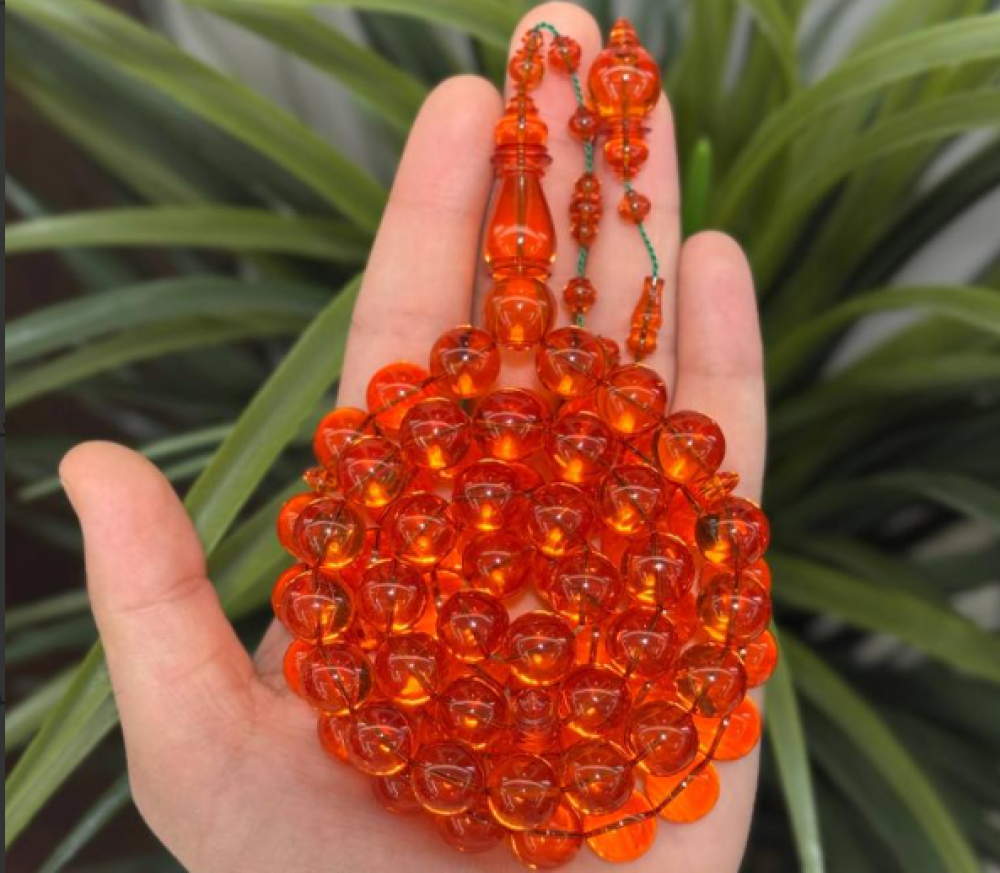
Faturan cast iron rosaries are a type of luxury rosary that has gained significant interest among rosary lovers in Saudi Arabia and the Gulf countries, especially for those looking for a piece that combines aesthetic appeal with a heritage touch at the same time.
“Faturan” is considered one of the distinctive materials in the world of rosary making, because it gives results close to natural materials such as amber, bone and old ivory, but it is originally a manufactured material that is formed in a precise way based on traditional hand casting.
What is the role of the fountain in the swimming pool industry?
Faturan is a type of cured resin material, specially developed to be moldable and castable, with control over color, transparency, and final gloss.
The importance of Faturan in the swimming pool industry lies in the fact that it combines several relatively rare properties:
- It gives an appearance very close to natural stones such as amber and ivory.
- It can be shaped with high precision inside molds
- It accepts coloring and color gradients easily.
- It has a smooth surface after polishing.
- Relatively scratch-resistant compared to ordinary plastic materials
These properties have made it a favorite material among craftsmen who are interested in making swimming pools with a luxurious character but at a reasonable price compared to rare natural materials.
Stages of manufacturing Faturan rosaries (old casting)
The manufacture of Faturan pools is not a random process, but rather goes through a series of precise steps that depend largely on the craftsman’s experience and artistic sense.
Initially, the raw material is carefully prepared, as the Faturan is mixed with additional materials that help to give the desired color, whether it is a transparent color, agate, or in shades of honey and amber, which are among the most requested colors in the Gulf market.
Next comes the molding stage, a very delicate phase, because any small mistake, such as pouring speed or the presence of air bubbles, can affect the quality of the final bead. Therefore, the pouring is done manually and slowly to ensure the material is evenly distributed within each mold.
Then comes the hardening stage, where the molds are left for a specific period of time until the material fully sets. This stage is important because it determines the final bead's hardness and stability during daily use.
After hardening, the beads are removed from the molds, and this is where the real craftsmanship begins, where each bead is individually inspected to ensure it is free of defects, then it is cleaned and any minor excess material resulting from the mold is removed.
The manual shaping stage of Faturan rosaries
What distinguishes Faturan rosaries made using the old casting method is that the shaping stage is not done entirely automatically, but depends on the manual touch in several important aspects.
It is done here:
- Precisely adjust the pill's shape to be comfortable in the hand.
- Uniform sizes
- Preparing the internal openings for thread passage
- Surface treatment before polishing
This step is what distinguishes a luxury product from a commercial product, because any rosary made carefully at this stage is more comfortable for daily use and gives a completely different feeling when reciting the rosary.
The quality of ancient casting in Faturan rosaries
The quality of a Faturan rosary depends not only on the material, but also largely on the casting and manufacturing method.
There are several very important factors:
1. Controlling the pouring: The slower and more deliberate the pouring, the lower the percentage of defects inside the bean, such as bubbles or internal voids.
2. Temperature during manufacturing: Controlling the temperature during mixing and pouring the material directly affects the hardness and final gloss of the grain.
3. Hardening time: The more time the material is given to harden naturally, the stronger the rosary will be and the less likely it is to crack later.
4. Manual finishing: This stage is what gives the rosary its final identity, where each bead is smoothed and polished separately to achieve the final, consistent shape.
The aesthetic value of Faturan pools
Faturan prayer beads are no longer just a tool for reciting prayers; they have become a personal item reflecting the owner's taste. Some people prefer dark colors that evoke a sense of luxury, while others prefer honey or transparent colors that reflect light beautifully.
The internal gradients within the bead also add an artistic touch that makes each rosary look different from the others, even if they are of the same design.
Why do customers buy Faturan rosaries made of Sultan stone?
At Sultan Stone Shop, the focus is on selecting high-quality raw materials from Faturan, with attention to the fine details in manufacturing, because the goal is not just to sell a rosary, but to offer a piece that combines beauty and practical use.
Among the most important features of the available swimming pools are:
- Careful selection of harmonious colors
- High-quality casting without bubbles or cracks
- Professional polishing that gives a balanced, not overly artificial, shine.
- Consistency of grains in shape and size
- Attention to final details such as the knot and the imam's bead
Distinguishing between genuine and imitation Faturan rosaries
Now we come to the most important part for the buyer: how to differentiate between high quality and ordinary products? And how to choose a rosary that lasts and suits your taste? Especially with the spread of many types in the market that differ greatly in quality.
At Sultan Stone store, the focus is always on educating the customer before purchase, because the rosary is not just a decorative item, but an item used daily and may stay with the person for many years.
1. Texture and weight
A rosary made of good quality Faturan usually has a balanced weight; it's neither too light like cheap plastic nor excessively heavy. To the touch, it feels smooth and even.
Cheap imitations, on the other hand, are:
- Very light
- or rough to the touch
- Or unbalanced in weight between the grains
2. Natural shine
Good fountain paint has a soft sheen that appears in the light without being overly harsh or plastic. The sheen here is subtle and gives a luxurious feel.
Inferior products, on the other hand, are:
- excessively shiny
- Or dull, without any shine
3. Internal details of the grain
One of the most important signs of quality is looking inside the bean (especially in transparent or honey-colored varieties). Good Faturan often shows:
- Natural color gradients
- simple internal veins
- Beautiful visual depth
While the imitation is a single, flat color without any details.
4. Grain uniformity
In good quality cast iron rosaries, although handmade, there is a clear consistency in size and shape. In poor quality ones, you will find an unpleasant difference between the beads.
Conclusion
In conclusion, Faturan rosaries, crafted from antique cast iron , are among the most distinctive types of rosaries in terms of both form and quality. They combine a traditional aesthetic with meticulous handcrafting, giving each rosary its own unique character. These rosaries are not chosen solely for everyday use, but are also acquired as valuable and beautiful pieces that reflect the owner's taste and attention to detail.
With the variety of products on the market, choosing a high-quality rosary remains the most important factor to ensure comfort during use and the longevity of the piece.
Therefore, Sultan Stone Store offers you a selection of Faturan rosaries made using the old casting method, with great attention to the quality of the material, the precision of the finishing, and the consistency of the beads.
If you are looking for a rosary that combines luxury, simplicity and authenticity, Sultan Stone products will be a suitable choice for you, whether for personal use or as an elegant gift that expresses taste and care.