
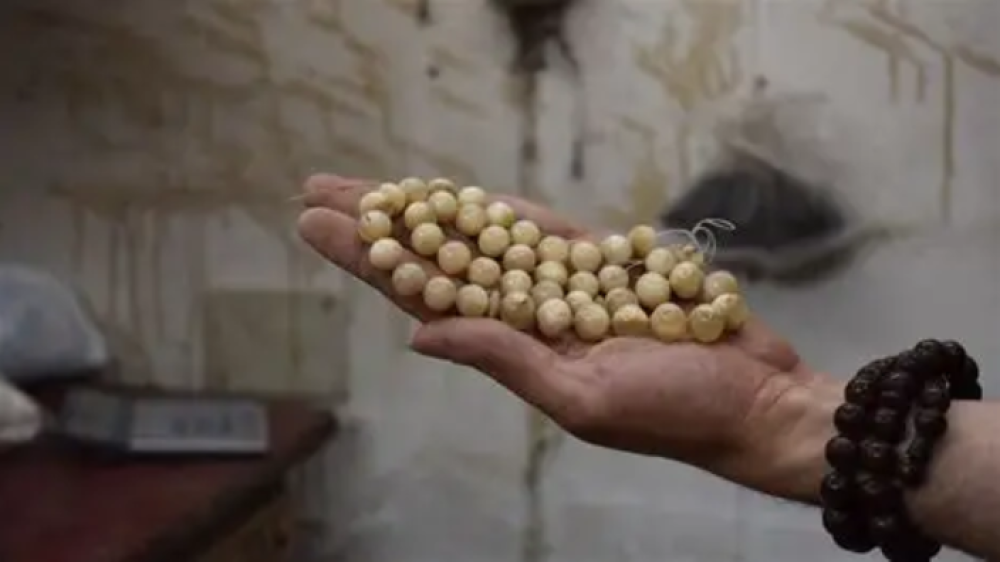
Handmade prayer beads are among the most prominent symbols of refined taste in the Arab world. They are not merely tools for prayer, but rather works of art that express taste, identity, and culture. In Saudi Arabia and the Gulf region in general, luxurious men's prayer beads hold a special place, presented as precious gifts and acquired as expressions of exclusivity and prestige. Despite the proliferation of various types of prayer beads, the skilled craftsman remains the most important element, bestowing upon each bead its artistic value. This craftsmanship combines meticulous handcrafting with the ability to work with natural gemstones without compromising their beauty or purity.
Because true quality isn't measured by appearance alone, Sultan Stone Shop has partnered with some of the most skilled stone turners in the Arab world, who masterfully transform raw stones into exquisitely detailed works of art. The shop also provides certified proof that all its materials are genuine natural stones such as amber, agate, coral, ivory, and coconut, giving customers complete confidence in the authenticity of their purchases.
What are the natural materials used to make prayer beads?
The value of a rosary depends on the type of stone used in its making, as each material possesses its own unique characteristics in terms of color, texture, and the spiritual energy believed by some enthusiasts. Among the most prominent natural materials used by rosary makers are:
- Natural amber : Considered one of the most sought-after stones in Saudi markets, amber is distinguished by its warm color and rarity. It is formed from the fossilized resin of trees millions of years ago, giving each rosary a luxurious character that is difficult to imitate.
- Agate: One of the precious stones that has been associated with a long history in the manufacture of prayer beads. It is known for its attractive color gradients from red to brown, and its ability to maintain its shine for long periods.
- Black coral (Yusr): A rare marine material used in the manufacture of luxury prayer beads, and its high value is due to the difficulty of obtaining it and polishing it by hand.
- Coconut and ivory: natural materials that give the rosary a soft and warm texture, and are often used in luxury men's rosaries that combine authenticity and simplicity.
These natural materials give each rosary its own identity, and shaping it requires a high level of skill from the lathe operator so that it does not lose its aesthetic qualities or strength.
The art of making handmade prayer beads
The craft of making handmade prayer beads is one of the oldest crafts that has retained its appeal despite the development of modern machinery. However, skilled craftsmen believe that a prayer bead can only truly possess its essence if it comes from the hands of an experienced turner.
In this craft, art and science intertwine; the turner studies the nature of the stone before beginning to shape it. Each stone has a different resistance to heat and pressure, requiring precise tools for engraving and polishing. Furthermore, the balance between the size of the beads and the spaces between them is essential, giving the rosary its smooth movement and fluidity in the hand—a detail mastered by only a few professional turners.
Handmade prayer beads are not merely a collection of beads, but an art form that relies on the personal touch of each craftsman. This is why some prayer beads are identifiable by their owner's signature, a small initial or distinctive pattern that establishes their identity, much like an artist signs their artwork.
How to make handmade prayer beads
The making of handmade prayer beads involves several precise stages that require patience and skill:
- Stone Selection: The process begins with carefully selecting natural stones. At Sultan Stone Shop, each stone is inspected to ensure its natural origin and that it has not undergone any artificial treatment.
- Cutting and shaping : The stone is cut into small blocks which are then precisely shaped into the perfect bead. This stage highlights the skill of the turner, as any small mistake could break the stone or distort its shape.
- Drilling and weight: A fine drill is used to create the holes through which the beads of the rosary pass, taking care to ensure that the weight is balanced among all the beads.
- Polishing and Coating: The beads are polished using natural materials to maintain their luster without altering their original color. In the case of amber prayer beads, heat polishing is used to bring out the natural shine of the amber.
- Final assembly and embroidery: After the beads have been formed, the rosary is assembled with sturdy threads and the “spacer bead” and “rosary” are added to complete the design.
All these stages are done by hand, making each rosary unique and never duplicated, even if made from the same stone. This exclusivity is what makes handmade rosaries crafted by certified artisans highly sought after by connoisseurs of luxury in Saudi Arabia and the Gulf region.
How to ensure the quality of genuine prayer beads
When someone acquires a luxurious rosary, they are not merely seeking beauty or monetary value, but rather authenticity and quality that reflect their refined taste. In the world of rosaries, true quality is measured by several elements, the most important of which is the signature of the craftsman who made it.
Every skilled bead turner possesses a unique artistic style that is reflected in the shape and symmetry of the beads, as well as the precise method of drilling, polishing, and balancing each bead. Therefore, the turners' signatures have become a mark of artistic quality, recognizable to bead enthusiasts at a glance.
At Sultan Stone Shop, authentic prayer beads are meticulously documented. Each product bears the signature of a certified craftsman renowned for his skill and reputation in the Arab markets. This signature is not merely an artistic mark; it guarantees the buyer that the rosary is handcrafted from 100% natural gemstones, such as amber, agate, yusr (black coral), ivory, and coconut, all supported by accredited certificates from specialized bodies confirming their authenticity and provenance.
A brief overview of the most famous lathe operators
The name "Sultan Stone" is associated with a select group of the most skilled turners in the Arab world, who have left their indelible mark on the world of luxury handmade prayer beads. Each of them has a distinctive style that sets them apart, to the point that their signature has become a recognized artistic mark.
Rabih Ghaith : He is distinguished by the precision of his work and the harmony of its details, and is known for his ability to achieve a precise balance between the elements that make up the rosary, reflecting a deep understanding of the aesthetics of the craft.
Ibrahim Bougherbi : One of the veteran craftsmen who combined experience and artistic balance, and is known for his precision in shaping and his attention to the quality of texture and finishing, which makes his works a model of craftsmanship commitment.
Ali Bughribi : One of the names that has maintained its presence in the field of rosary making, and is distinguished by a masterful style in controlling the overall shape and the harmony of details, with special attention to the finishing touches that reflect his high craftsmanship.
Alaa, Moataz and Bilal Farid : A group of craftsmen who combine artistic sense and precision in execution, and are known for their commitment to the traditional standards of the craft while maintaining consistency of form and balance between the components of the rosary.
Abu Omar al-Hariri : A prominent craftsman known for his ability to combine precision in work with preserving the classical character of the industry. His works are appreciated for their discipline and mastery in craftsmanship.
· Muhammad Karam Baraka : He possesses a balanced style in design and execution, and is known for his attention to minute details and his serious approach to the various stages of manufacturing, which gives his work a distinctive character among craftsmen.
· Darwaza : One of the craftsmen who were distinguished by their precision and discipline in the craft, and his works are known for their balance and durability, with a clear commitment to traditional manual methods.
· Ambrosa : He is one of the names that is widely appreciated among craftsmen, and he is distinguished by his precision in shaping and his ability to maintain the overall harmony in the work from beginning to end.
· Kafir Kok : One of the names that represents the traditional school in the manufacture of rosaries, he is known for his strict adherence to precise measurements and symmetry between the components of the work, which reflects his respect for the rules of the original craft.
Khaled Abu Salem : One of the craftsmen who combines precision and simplicity, he pays special attention to the overall balance of the rosary and the quality of the head and spacers to ensure ease of use and straightness of shape.
· Darwish Ochungu : A name with a global presence in the field of rosary carving and making, appreciated for his commitment to accuracy in work and his adoption of a style that combines craft discipline and refined taste in execution.
• Ahmed Shawn : He is distinguished by his mastery of shaping and polishing processes, and is known for his attention to surface quality and weight balance, reflecting a deep understanding of the requirements of precision manufacturing.
These craftsmen, with their years of experience, form the essential foundation upon which Sultan Stone relies to present its luxurious rosaries, where authentic oriental art meets modern precision in every piece displayed on its platform.
Sultan's Stone and Choosing the Best Lathe Makers
Choosing a stoneworker is no simple task; it depends on precise criteria that combine skill, integrity in handling natural stones, and the ability to innovate. For this reason, Sultan Stone Shop is known for dealing only with certified stoneworkers who have a documented track record in crafting authentic prayer beads.
The store distinguishes itself by providing official quality certificates for each rosary, confirming that the stone used is 100% natural and has not undergone any artificial treatment. The craftsman's signature is also affixed to the product as an added guarantee, giving the buyer absolute confidence that what they hold is not just a rosary, but a genuine work of art imbued with the spirit of its maker.
That precision in selection has made Sultan Stone one of the most prominent and trusted stores in Saudi Arabia and the Gulf, as it has become the first destination for lovers of handmade prayer beads who are looking for uniqueness and authenticity.
Conclusion
Handmade prayer beads remain a mirror reflecting the Arab world's passion for beauty and symbolism, each bead telling a story of precision and mastery. Through collaboration with a select group of the most skilled rosary makers in the Arab world, Sultan Stone has successfully combined authenticity, luxury, and proven quality, offering its clients genuine prayer beads crafted from natural gemstones, bearing an artistic signature that resonates with refined taste and spirit.